

Clear Aligner Treatment
What is clear aligner treatment?
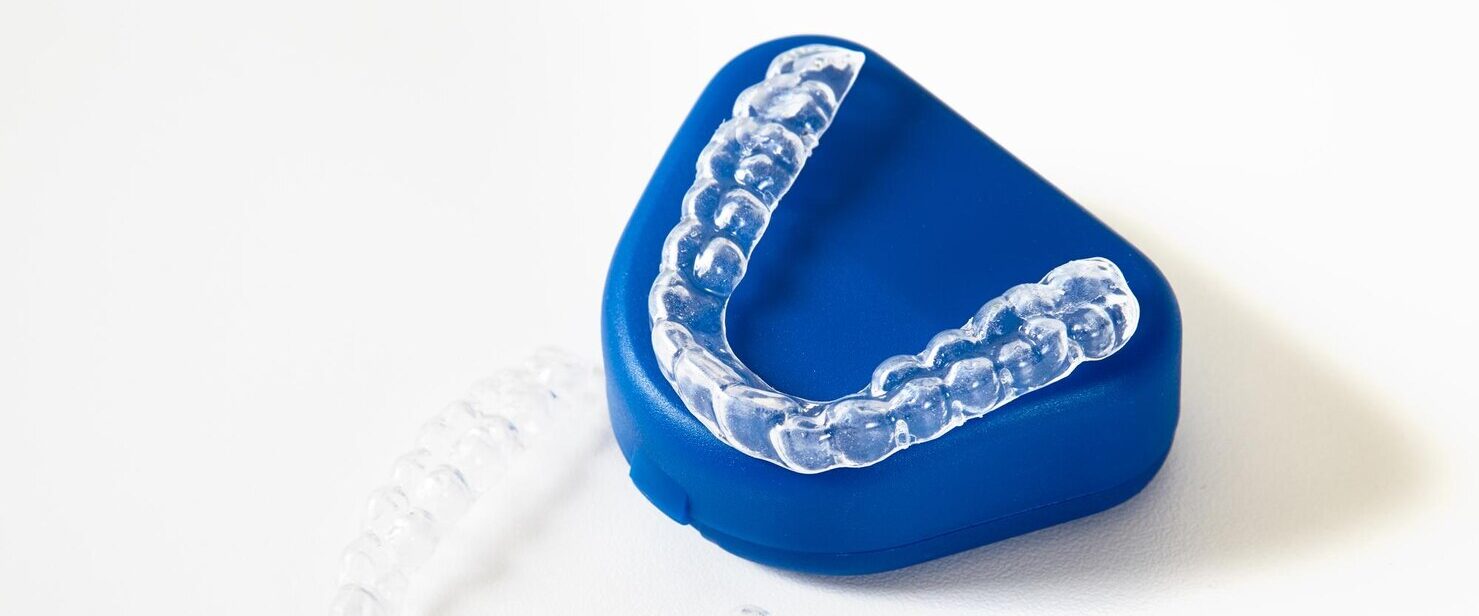
Clear aligner treatment is uniquely tailored to each individual. Using advanced computer-assisted programs, transparent trays are meticulously designed to fit the mouth and jaw structure of every patient. These trays, also referred to as invisible aligners or clear aligners, are orthodontic solutions utilized to address dental misalignments and correct irregularities that may cause discomfort. Due to their ease of use, clear aligners have gained popularity. This treatment, which is aesthetically pleasing and almost imperceptible to others, avoids the use of traditional metal wires and brackets. Patients can easily remove their clear aligners while eating or brushing their teeth, reducing any potential discomfort.
How is Clear Aligner Treatment Applied?
Clear aligner treatment begins with the dentist taking impressions of the patient’s mouth. These impressions are then transferred to a state-of-the-art computer environment using 3D scanning technology, where the teeth are digitally manipulated to create clear aligners. The aligners are produced in a series according to the desired position of the teeth. Each aligner provides a movement of 0.05 mm per tooth. The aligners are worn for an average of 7-10 days, and as the treatment progresses, patients transition to the necessary additional aligners under the guidance of their dentist.
How to Use Clear Aligners?
Constant force is necessary for teeth to move. Therefore, orthodontic aligners, including clear dental trays, should be worn for approximately 21-22 hours per day, including during sleep. They should only be removed for eating and brushing teeth.
Advantages of Clear Aligners
• Patients can visualize the treatment outcome in three dimensions before starting treatment, thanks to the simulation created digitally.
• They can be removed while eating and brushing teeth.
• Patients with important commitments can remove them for an additional 2-3 hours per week.
• They do not interfere with activities such as sports or swimming.
• They do not cause speech problems.
What Age is Suitable for Clear Aligners?
Clear aligners can be used for both adolescents and adults if the bone and gums are healthy. They are applicable for correcting dental misalignments, closing gaps between teeth, planning smile aesthetics, and preparing for prosthetics. After treatment, teeth are secured with a thin wire from behind to prevent them from returning to their original position. This wire is completely invisible from the outside.
Do Clear Aligners Cause Pain?
When clear aligners are first worn, some pressure may be felt, but patients can quickly get used to it.
How to Clean Clear Aligners?
Patients can remove their aligners to clean both their teeth and the aligners, just like their regular dental hygiene routine. Aligners can be gently brushed without causing any damage, making it easy to maintain oral hygiene.
How to Maintain Clear Aligners?
Consumption of tea and coffee may stain the aligners. Smoking can also cause discoloration, but since aligners are changed every 15 days, treatment continues with clean aligners. Aligners can be cleaned by brushing them with a toothbrush under warm water every morning and evening.
What to Consider Before Clear Aligner Treatment?
Before starting treatment, all cavities must be treated, and all necessary oral care procedures must be completed. Depending on the situation, the dentist may request the extraction of wisdom teeth before or after treatment. Prosthetic procedures such as bridges or implants are postponed until after clear aligner treatment to ensure they are compatible with the new dental structure. Once the mouth is ready, measurements are sent abroad for processing, and the treatment plan is detailed by the dentist using an online system. It may take about 1.5 months for the aligners to be produced and cleared from customs.
Post-Treatment Control for Clear Aligners
Your doctor may want to see you monthly or every 2 months for a check-up. The daily use of aligners is monitored by an orthodontic specialist using indicators on the aligners. If you are unhappy with the appearance of your teeth but don’t want to wear braces, clear aligners will come to your rescue. For detailed information about clear aligners, please contact our consultants.
Braces Treatment
What Is Braces Treatment?
Braces treatment, conducted by orthodontists, is a method aimed at aligning teeth and jaws in three dimensions to correct irregularities (misalignments) in the dental arch.
How is braces treatment performed?
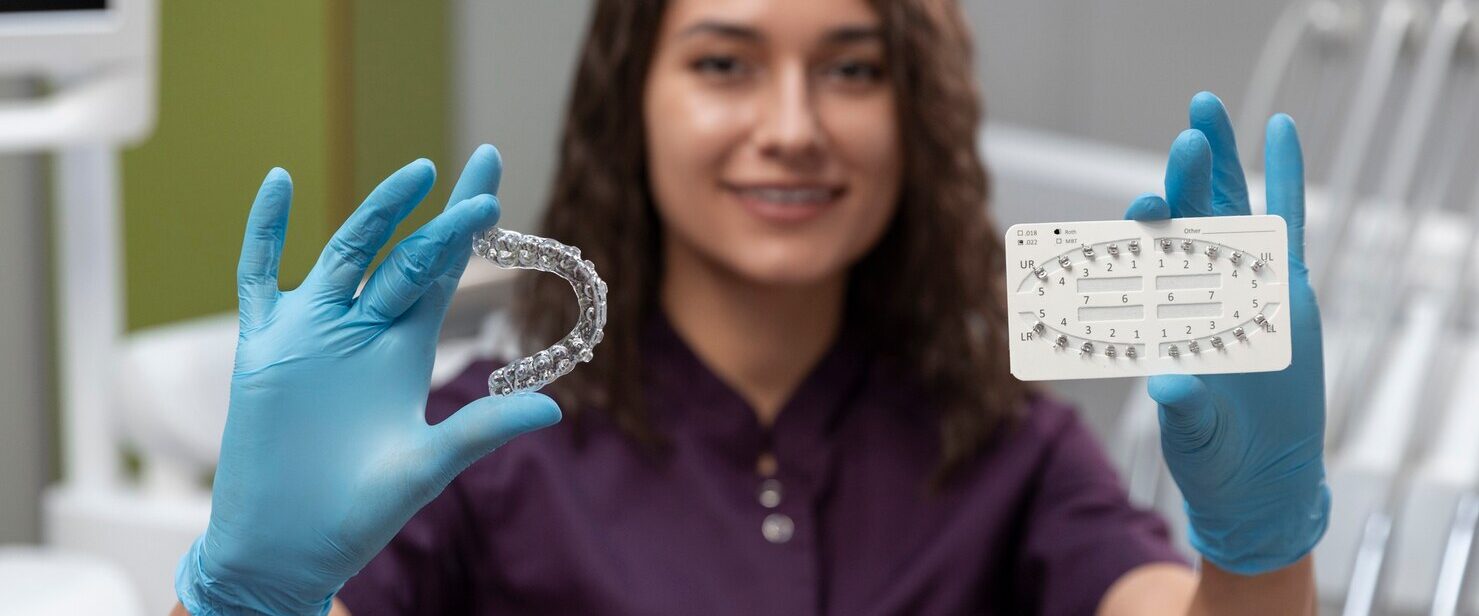
Braces treatment is based on the principle of moving the brackets and wires placed on the teeth in a certain direction, for a certain period of time, with the principle of continuous force application, to bring them into the desired alignment.
The desired position of the teeth can only be achieved with constant and gentle pressure. Brackets are apparatus that are attached to the teeth and have holes on them through which the wires can pass. Since the brackets are attached to the teeth, they contribute to the treatment 24 hours a day. Brackets can be called handles that help to direct the teeth correctly. The wire attached to the brackets applies a certain force to the teeth to return to its normal state. Thus, the teeth are brought to the desired position over time.
The aim of orthodontic treatment is to move the teeth within the bone. This movement is not possible in a few days. The teeth are expected to move in the bone by 1 or 2 mm per month. At some stages of treatment, patients may be asked to use elastic agents. These are simple elastics that the patient can change on their own every day. Thanks to modern treatment techniques, the desired results can be achieved in shorter and less frequent appointments. In addition, patients are offered treatment options such as metal, ceramic and glass braces, which have various advantages over each other.
When Is Braces Treatment Done?
The International Association of Orthodontics recommends that all children undergo an orthodontic check-up by the age of 7. This allows developmental issues to be identified early, and conditions requiring preventive interventions, such as space maintainers, can be diagnosed. Early treatment, if foreseeable, is highly valuable in preventing major issues in the future. Generally, treatment does not commence before the age of 10-12. Even if no treatment is provided at the initial appointment, the examination and X-rays taken are valuable for monitoring growth and development, aiding subsequent appointments.
Orthodontic treatment can be undertaken at any age.
Orthodontic Treatment for Adults
Orthodontic treatment is possible at any age for adults. It’s never too late to experience the positive aspects of having a beautiful smile. Adults may experience teeth shifting due to extractions or pre-existing irregularities. All these issues can be easily resolved through orthodontic treatment, sometimes in collaboration with other dental specialties. With advances in technology in recent years, the increasing use of braces in adults has become more feasible and widespread.
Things to Consider During Orthodontic Treatment
Orthodontic treatment is a lengthy and patience-demanding process that requires careful attention. Throughout the process, our orthodontists will provide you with the necessary information and explain the treatment in detail. To ensure the success of the treatment, it’s essential for patients to follow their doctor’s instructions in their daily lives. During the treatment period, it’s important to avoid certain foods and drinks. These include hard foods like apples, pears, the crust of bread, chips, and nuts. Sticky foods like gummy candies, Turkish delight, caramel chocolate, and chewing gum, as well as alcoholic and carbonated beverages, can dislodge the braces and cause inconvenience during treatment. Choosing soft, watery, and easily chewable foods is necessary to prevent damage to the braces.
Individuals wearing braces should protect their oral region against external impacts and take care not to break the brackets. Those who engage in sports, such as football or basketball, should consider taking a break from these activities while wearing braces, considering the possibility of impact during sports.
Brace Care
During orthodontic treatment, it’s important to avoid using hard brushes and applying excessive pressure while brushing your teeth to prevent damage to the brackets. Therefore, it’s recommended to use a soft-bristled brush and brush gently. Using interdental brushes to clean between the brackets can be helpful. Single-end stiffened dental floss can also be used for the same purpose.
Digital Orthodontics
• At Alfadent Clinic, we prioritize the use of modern, state-of-the-art technologies while preserving oral and dental health. Just like in all fields of dentistry, digital technologies are employed in orthodontic treatments as well. With the Itero Scanner (Itero intraoral scanner), you have the opportunity to see how your teeth will look after orthodontic treatment in just minutes.
• In orthodontics, obtaining and periodically monitoring dental and jaw records is essential for diagnosis and treatment planning. With digital panoramic and cephalometric radiography, our patients’ jaw structures are examined, and with intraoral 3D CAD-CAM cameras, measurement records can be obtained from our patients.
Let's Plan Your Treatment Together.
With 20 years of experience and expert dental professionals and consultants, we welcome you to Alfadent Clinic.
Contact us to discuss your personalized treatment plan.

Alfadent Clinic
“It is our priority to create the most suitable treatment plan for you and ensure that you have a healthy smile.
Contact us now and experience the change in your smile!”
Treatments
Social Media
Don’t forget to follow Alfadent Clinic’s agenda to follow the topics on the agenda and to contact us.


Alfadent Clinic ®2024 . All Rights Reserved.
Alfadent Clinic ®2024 . Tüm Hakları Saklıdır.